The Improvement Loop: Talks on Self-Improving Agents at Proxify, Kunumi Institute, and DanAds

What happens when an AI system starts improving the way it improves itself? That question, recursive self-improvement (RSI), took me to three very different audiences this autumn. The talk was well received, so it ended up traveling.
Proxify Talks
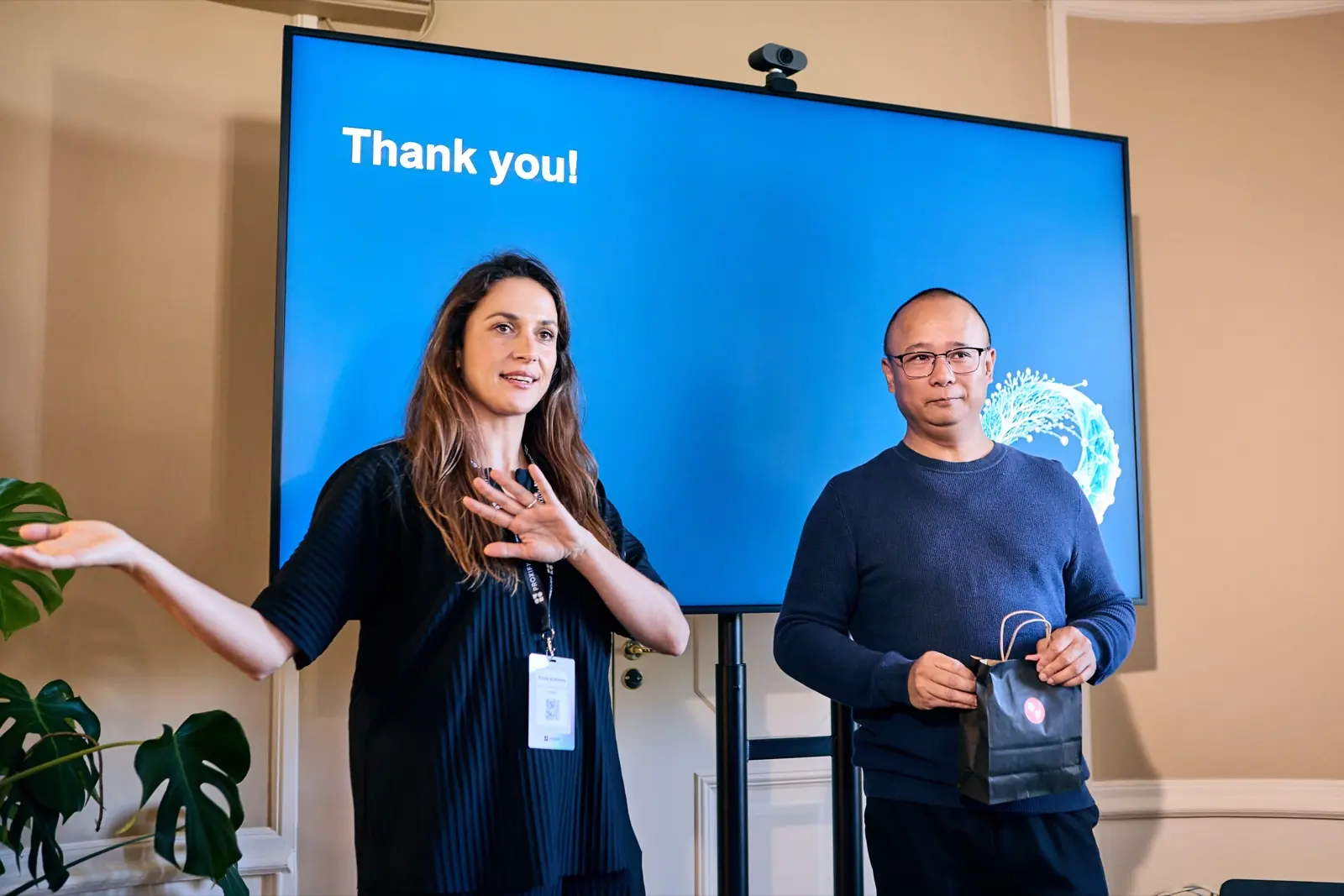
A breakfast keynote: Self-Improving Agents: From Prompt Engineering to Hyperagents.
Kunumi Institute
Invited by Dhiana Deva for a conversation with the research collective.
Each session drew 60–100 people, a clear sign of how many engineers, researchers, and business leaders are thinking about this topic right now.
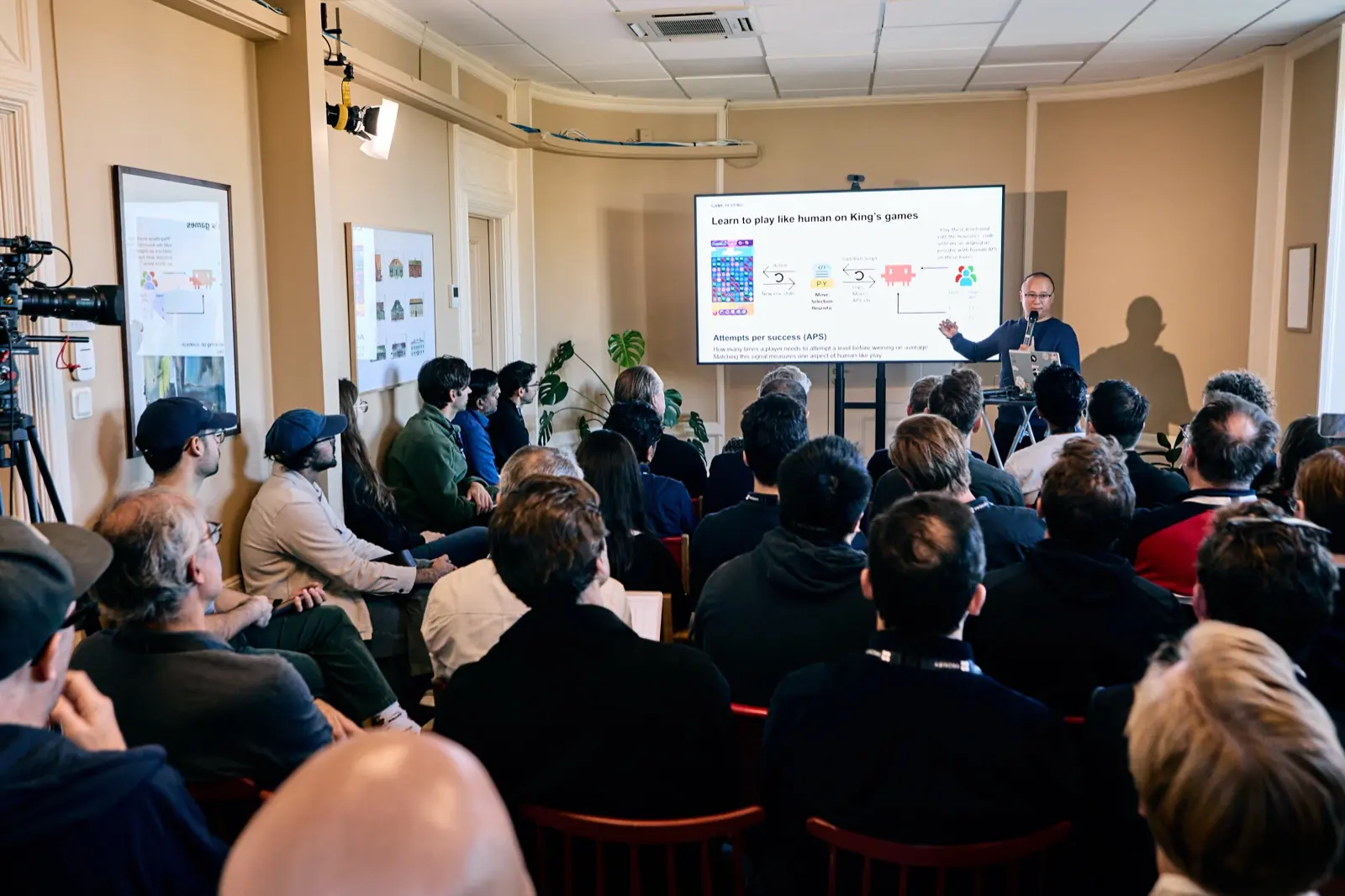
Opening with a provocation
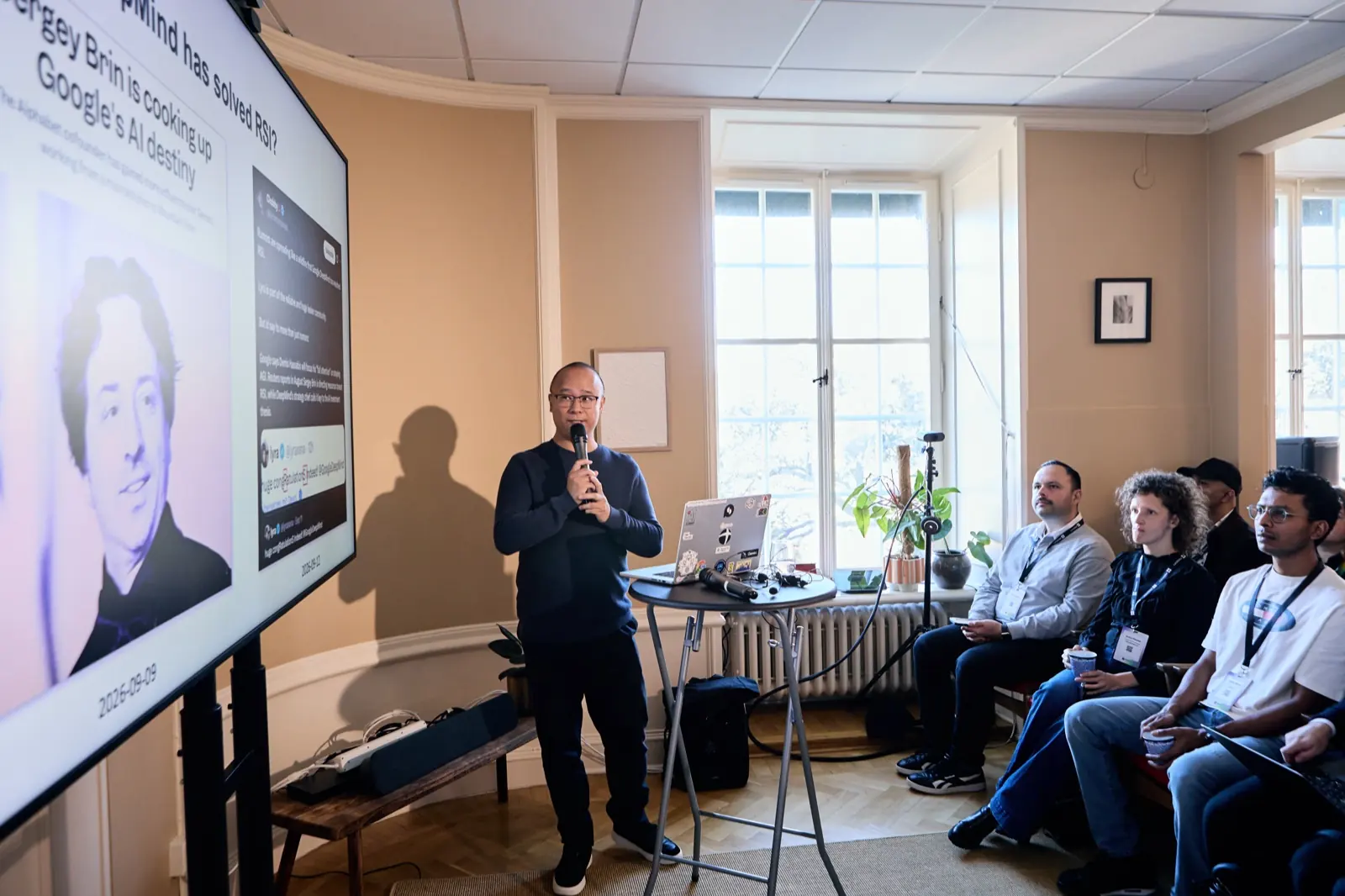
I opened with a question: has Google DeepMind solved RSI? Headlines and rumors say "AI improves AI" is already here, from AlphaEvolve speeding up Gemini training kernels to a sharp rise in RSI papers. But a rising paper count measures research activity, not demonstrated recursive capability. The rest of the talk was about telling the two apart.
01 · Understanding RSI
The key question is who makes the next version. Engineers shipping releases is ordinary progress. The recursive step comes when the system proposes and tests edits it can retain, and eventually improves how the next improvement is produced. I walked through seven levels of self-improvement: from a better answer, to a better agent, to improving the improver, to developing a successor model. I mapped representative systems onto them, including Karpathy’s autoresearch, Meta’s HyperAgents, MetaRSI, and Google’s RRSI.
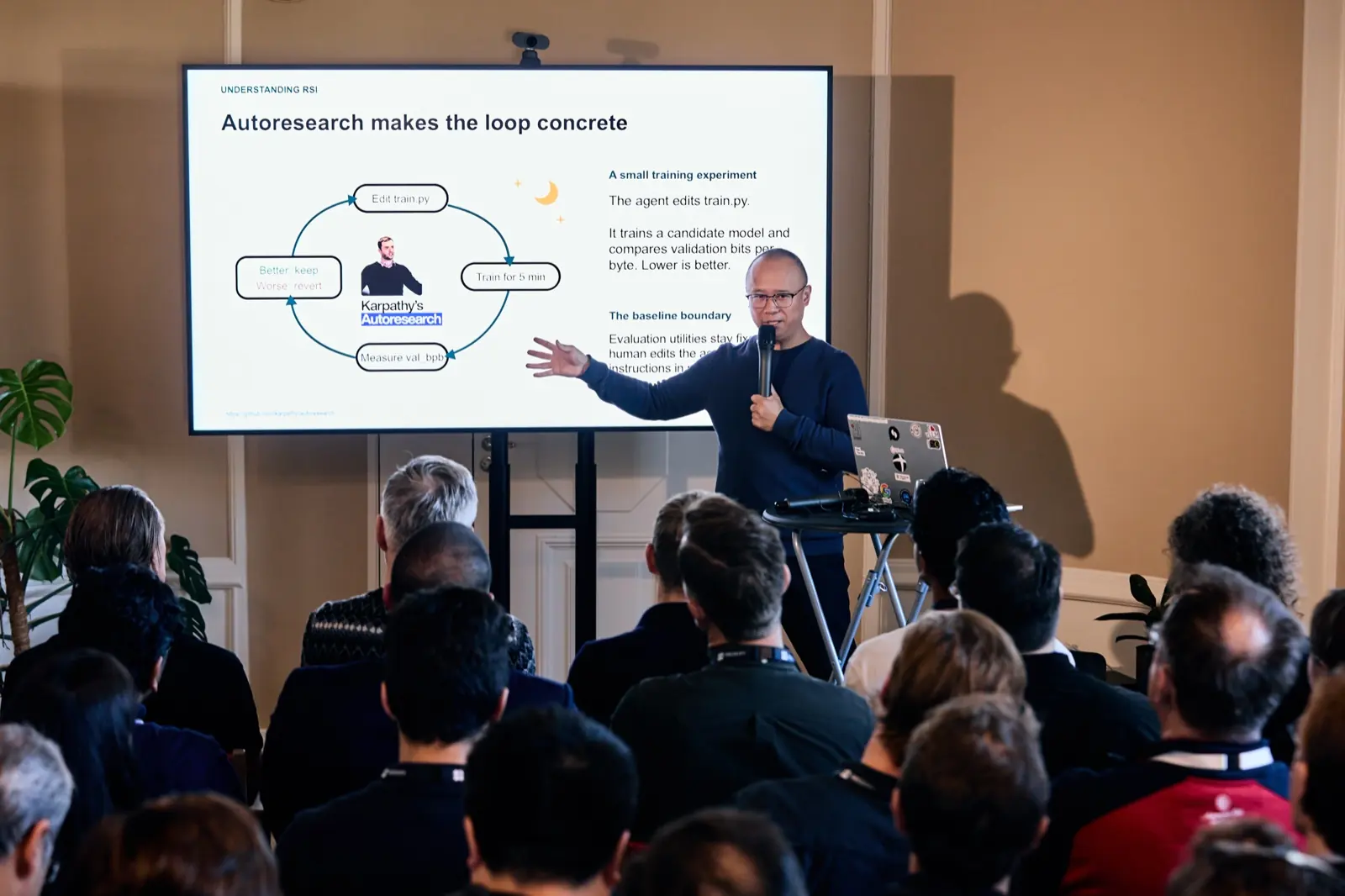
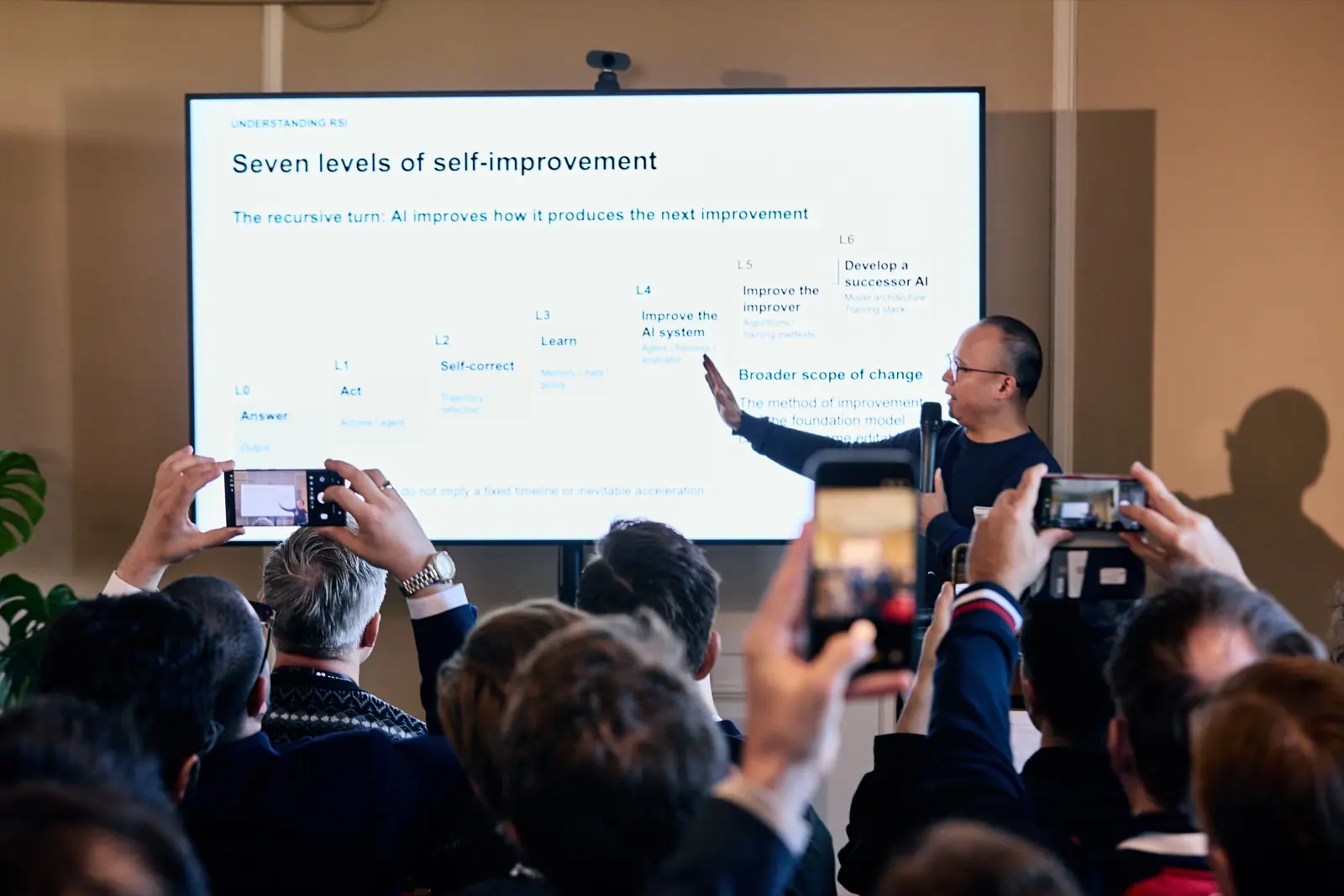

Keep tests and scoring rules outside the candidate's edit permissions.
The universal loop of RSI is simple: run and inspect, propose variants, then evaluate and select against a baseline on fresh tasks at a matched budget. The hard part is the evaluator. If the system can edit the thing that grades it, you no longer have an improvement loop.
Three use cases
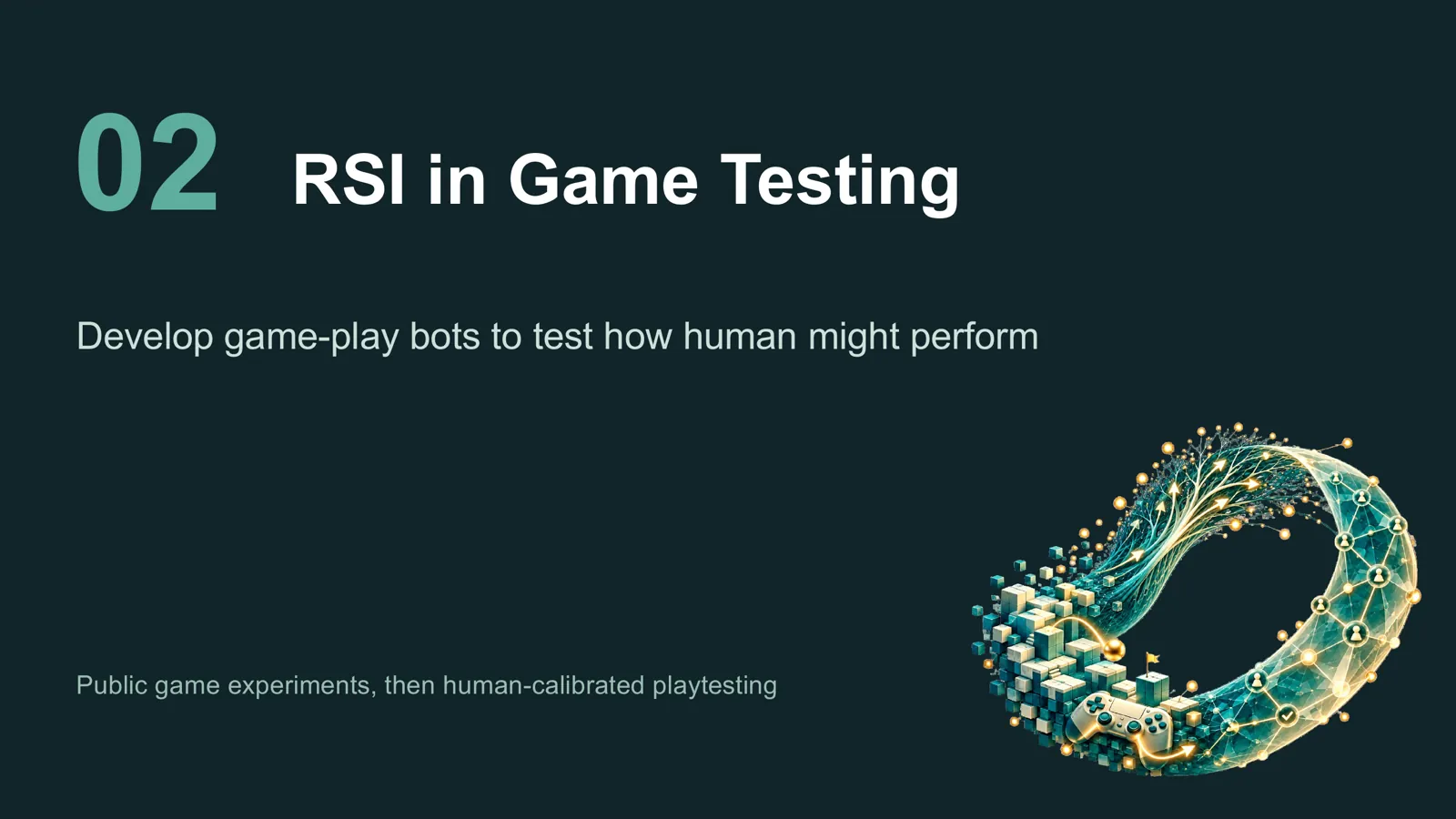
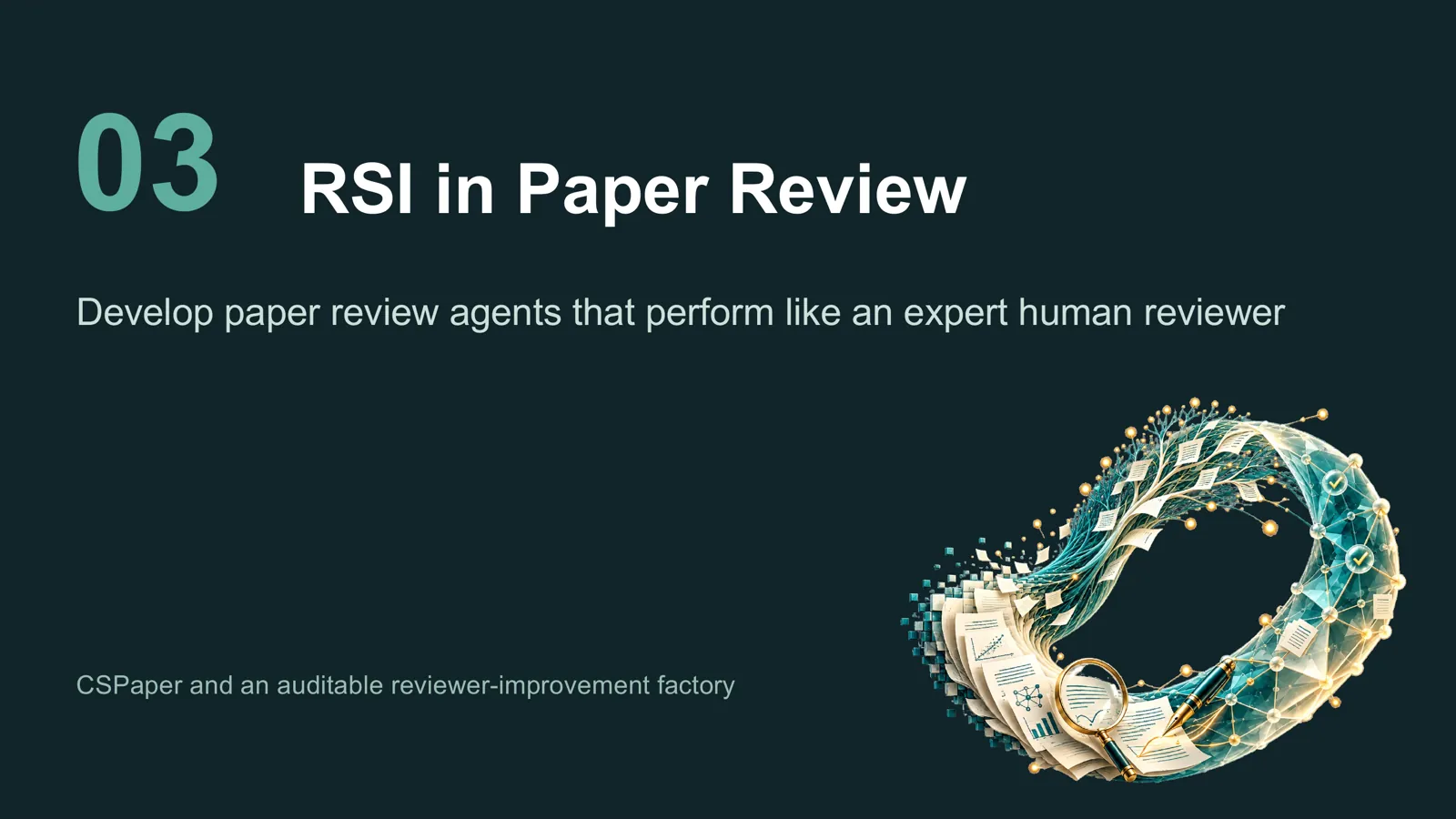
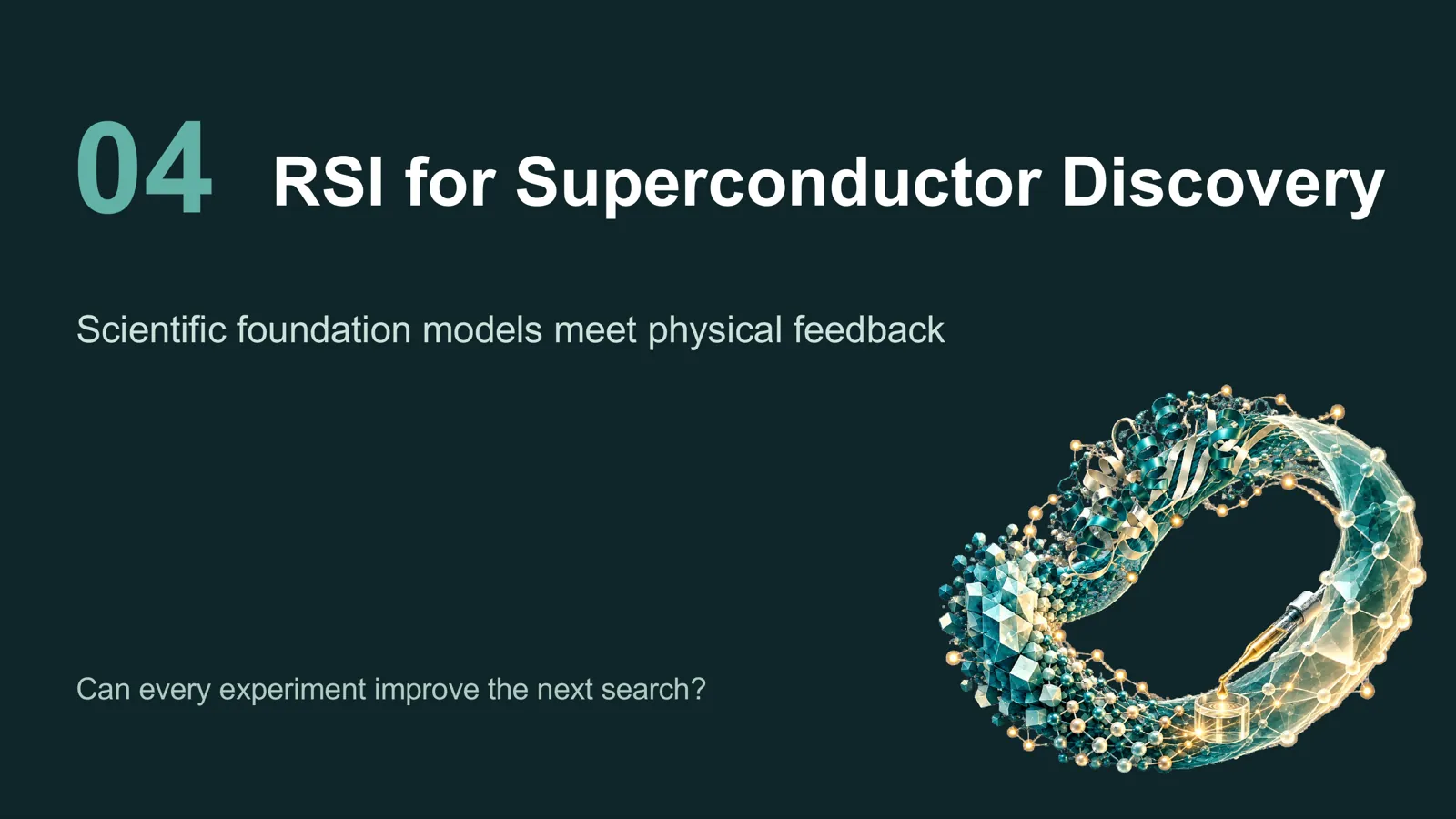
The paper-review results drew the most questions. Under a matched budget (same base model, evaluator, and number of scored candidates), SIRA’s constrained, expert-guided search outperformed a HyperAgents-style open search on best validation decision-label accuracy (agreement with historical accept/reject decisions):
A smaller, better-regularized search space found a stronger candidate sooner. The superconductor case showed the other half of the lesson: a plausible crystal can pass the structure check and still fail the property test. Credible feedback, whether from experts, production, or the physical lab, is what closes the loop.
The rooms


I closed each session with open questions for practitioners, and they kept the Q&A lively. What change should survive into the next attempt? Where does credible feedback come from? How do you price an accepted outcome? And what is the irreplaceable role of the human?
Resources
- 🖥️ Slide deck: The Improvement Loop: Fundamentals and Use Cases
- 📅 Event page: Proxify Talks: Self-Improving Agents
- 🧪 Our work: SIRA agent factory · CSPaper Review Rank · CSPaper
- 📚 Referenced systems: autoresearch · HyperAgents · MetaRSI · RRSI · AlphaEvolve · Learning Beyond Gradients · ElementsClaw
What’s next
Thank you to Proxify, to Dhiana Deva and Kunumi Institute, and to Reza Malekzadgan and the DanAds team for the invitations and the sharp questions. Unfortunately, with my limited bandwidth, I can’t accept further talk invitations for now.
My focus now is on applying RSI where it creates real business value and real benefit for people. Foundation models keep getting better every few months, so a well-built improvement loop gets a stronger engine each time the underlying model is upgraded. The lasting advantage lies in what sits around the model: trustworthy evaluators, expert-shaped search spaces, and feedback grounded in the real world. That is the layer I’m building, from game testing at King to research verification at CSPaper. If you’re working on loops like these, I’d love to compare notes.